Agentic Research & Report Assistant
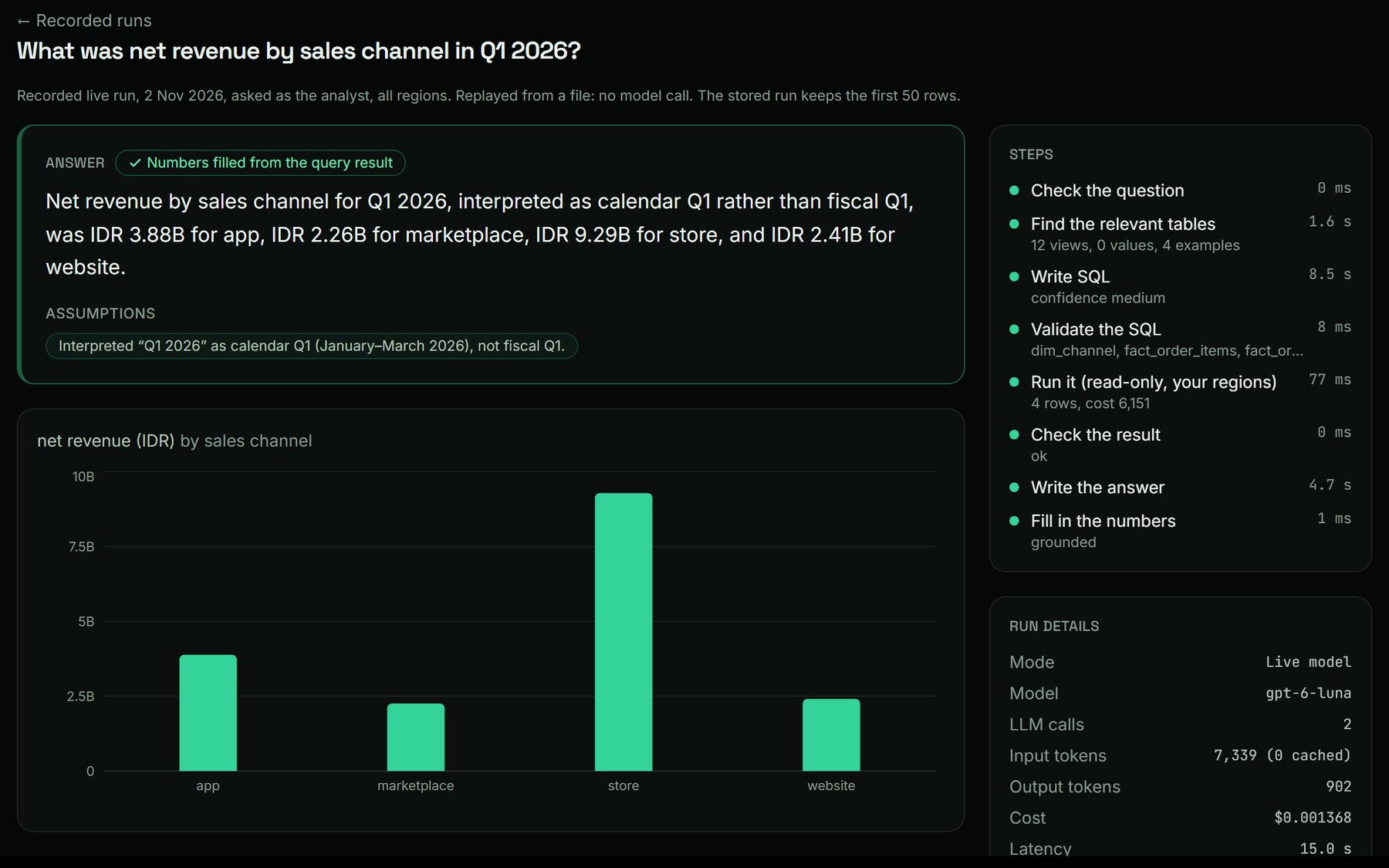
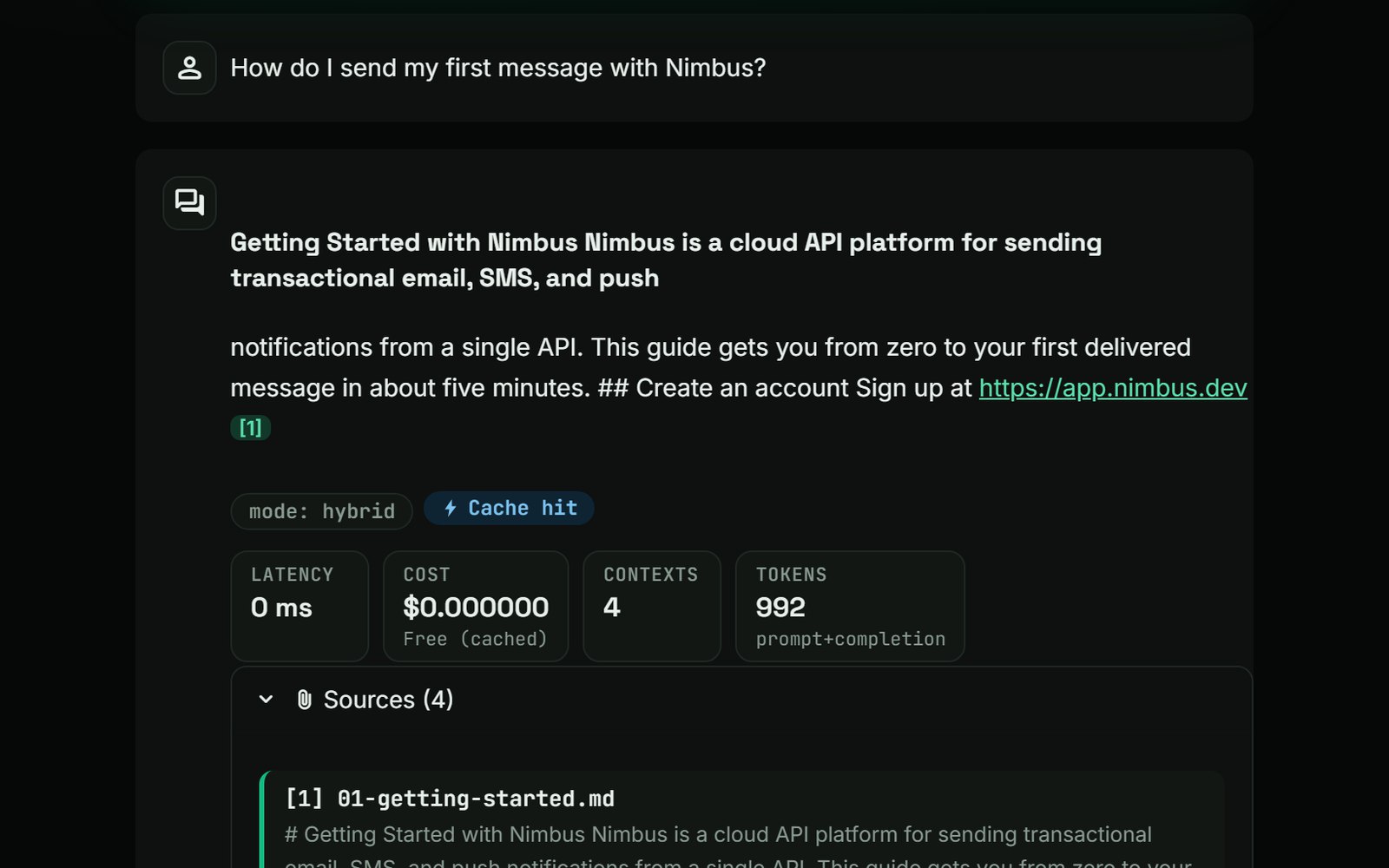
A LangGraph multi-agent system that plans the research, gathers evidence, drafts a report, and has a critic check each claim against its cited evidence. It can’t cite a source it didn’t gather, it runs fully keyless at $0, and the public demo’s History includes two runs recorded in real mode.
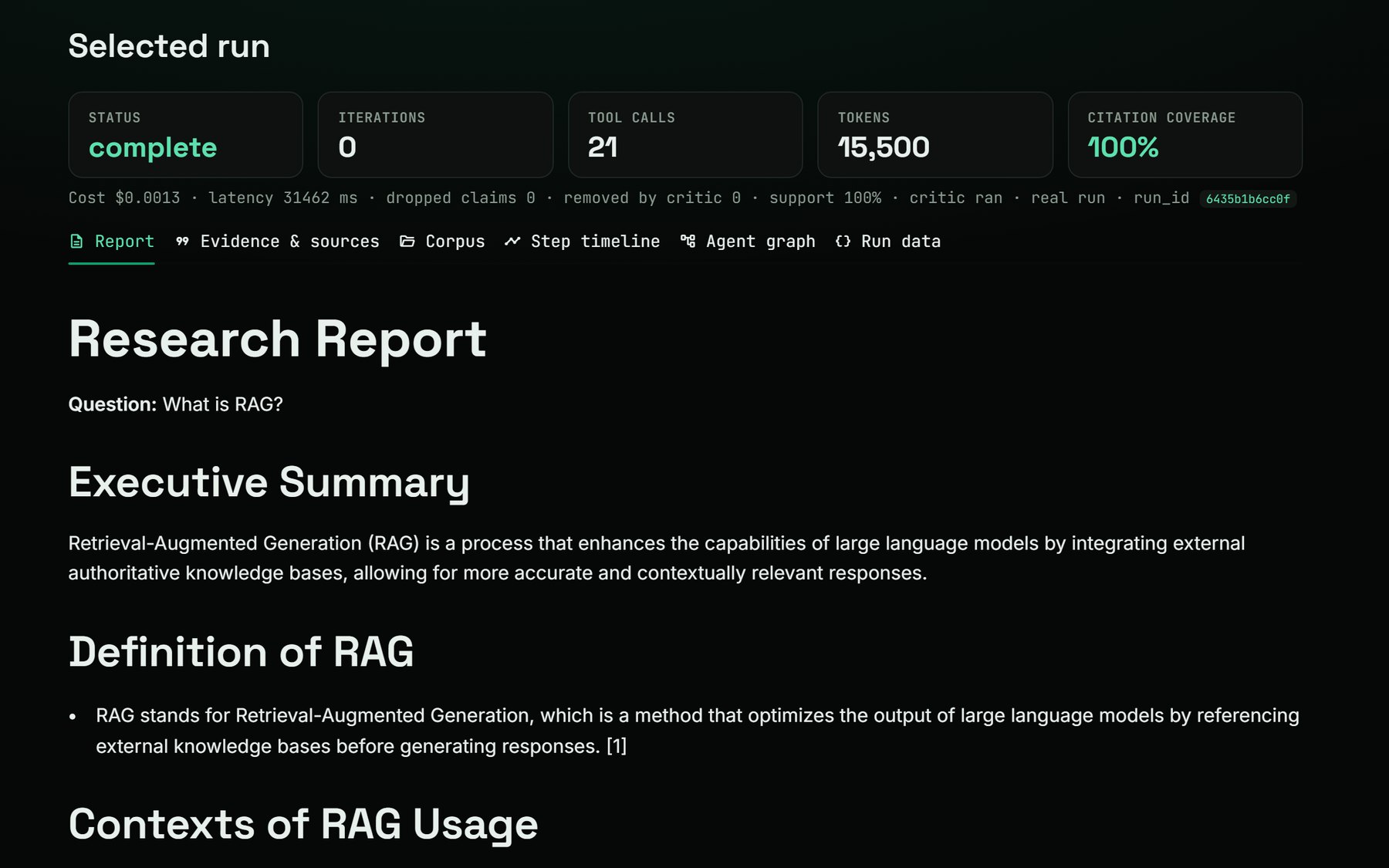
- 1.00source validity in keyless, real-LLM & live-web runs
- 27.5 slive-web run, 100%-cited report
- ~$0.001–0.002measured cost per real run
- 168tests, all run in CI
how it’s built
Use caseDesigned to turn a research question into a structured, fully cited first draft in minutes instead of hours of reading and fact-checking — every citation traces to a source it actually gathered, never an invented one.
Beyond the modelA base model answers in one shot from training memory; this plans the task, gathers its sources, and checks each claim against them — multi-step research a single prompt can’t do reliably.
- Planner → Researcher → Writer → Critic → Finalizer agents on a typed LangGraph state graph — conditional edges, a revise loop, and a budget guard on every edge
- A no-fabricated-sources guarantee: any citation to an ungathered source is stripped, and a claim left with no valid citation is dropped — proven by a dedicated test
- Human-in-the-loop approval: when required, the run pauses before release (LangGraph
interrupt()with a checkpoint) and a person approves or rejects the exact draft — in the UI or over the API - Web pages treated as hostile input: the model has no tools and answers in checked JSON, an image or link planted in a page renders as plain text, and an SSRF guard refuses internal addresses on every redirect and pins each connection to the address it checked (no DNS rebinding)
- Evaluation wired into CI as a merge gate — real metrics, none hand-written; every run traces tokens, USD cost, and latency, with p95 aggregated at a /metrics endpoint
- Also served over MCP (3 tools + 1 resource) — Claude Desktop or any MCP host can call it and inherit the citation guarantee; paid runs are opt-in, and the only setting the calling model can change is depth
what real runs taught me
- Validated beyond the keyless demo: a live-web run returned a 100%-cited report in 27.5 s, degrading gracefully when sites refused to be fetched; measured real runs cost ~$0.001–0.002 each
- Re-ran the critic A/B against a real model over 3 repeats and published the null result (+0.004 ± 0.007) rather than the inflated keyless figure the deterministic fake writer produces by construction
- The live-web eval also caught a real bug — one unpunctuated page became a single ~1 MB “sentence” and burned 210k tokens; a snippet cap cut that run 95%, keyless output byte-identical, pinned by a regression test
- LangGraph
- MCP
- FastAPI
- Pydantic
- Streamlit
- DSPy
- Docker
- AWS EC2